- Company
- BioNTech
- Role
- Nobel Laureate & Former SVP
- Est. Net Worth
- $5 Million (Est.)
- Stage
- Emerging
- Industry
- Healthcare
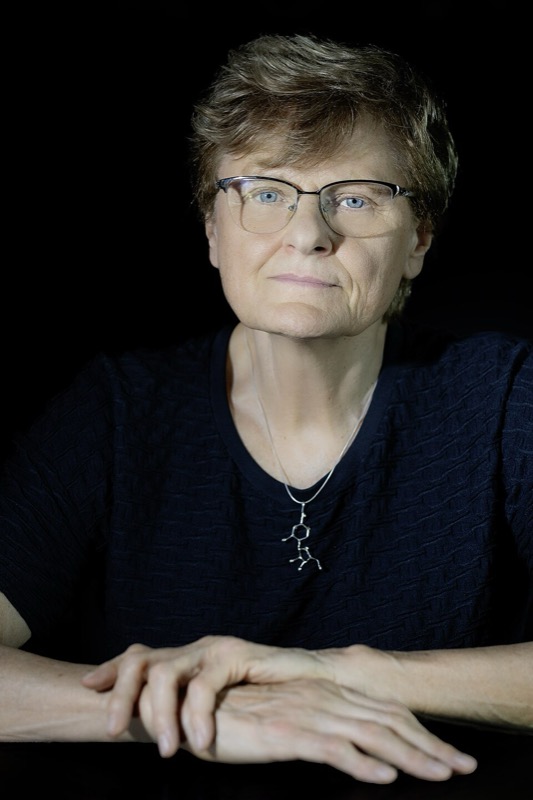
Katalin Karikó
Nobel Laureate & Former SVP at BioNTech
About
Katalin Karikó spent decades as an underfunded, repeatedly demoted researcher at the University of Pennsylvania, pursuing the then-unfashionable idea that modified messenger RNA could be used therapeutically — work that nearly every grant committee and tenure review board dismissed as a dead end. Her breakthrough discovery, made with collaborator Drew Weissman, that chemically modifying nucleosides in mRNA could prevent the immune system from destroying it before it could deliver its therapeutic payload, became the foundational technology behind the Pfizer-BioNTech and Moderna COVID-19 vaccines. Those vaccines were administered billions of times worldwide, saving an estimated 20 million lives in their first year alone. Karikó was awarded the 2023 Nobel Prize in Physiology or Medicine, and her story — decades of persistence in the face of institutional rejection — has become perhaps the most compelling argument against short-term thinking in scientific funding.
Current Company
BioNTech — Nobel Laureate & Former SVP
Decades of Rejection and the Discovery That Changed the World
Katalin Karikó's story has become the most powerful modern parable about the dangers of short-term thinking in scientific research. For more than two decades, Karikó pursued the idea that synthetic messenger RNA could be used to instruct cells to produce therapeutic proteins — an approach that nearly every grant committee, journal editor, and university administrator she encountered dismissed as impractical. In 1995, the University of Pennsylvania demoted her from the tenure track, an action that in academic science is typically a career-ending signal that an institution has lost confidence in a researcher's work. Most scientists in her position would have pivoted to more fashionable research questions or left academia entirely. Karikó stayed, accepted the demotion, and continued her mRNA work with whatever funding she could cobble together.
The breakthrough came in 2005, when Karikó and her collaborator Drew Weissman published a paper demonstrating that replacing one of the four nucleoside building blocks in synthetic mRNA with a modified version called pseudouridine could prevent the immune system from recognizing and destroying the mRNA before it delivered its therapeutic instructions. The paper received little attention at the time — it was published in a relatively obscure journal and cited only sporadically for years. But the discovery was foundational: it solved the central problem that had made mRNA therapeutics impractical, and it became the enabling technology behind the COVID-19 vaccines that would be developed fifteen years later by BioNTech/Pfizer and Moderna.
A Nobel Prize and the Vindication of Persistence
When the COVID-19 pandemic struck in 2020, the mRNA vaccine technology that Karikó had spent decades developing proved to be the fastest path to an effective vaccine — precisely because mRNA vaccines could be designed, manufactured, and scaled up far more quickly than traditional vaccine approaches. The Pfizer-BioNTech vaccine, developed using the nucleoside modification technique that Karikó and Weissman had discovered, was the first COVID-19 vaccine authorized for emergency use, and together with the Moderna vaccine (which used the same underlying technology), it was administered billions of times worldwide. The WHO estimated that mRNA vaccines saved approximately 20 million lives in their first year of deployment alone — making Karikó's persecuted research one of the most consequential scientific contributions of the twenty-first century.
The 2023 Nobel Prize in Physiology or Medicine, awarded jointly to Karikó and Weissman, was a vindication not just of their specific discovery but of a broader principle: that transformative scientific breakthroughs often come from researchers working at the margins of their fields, pursuing ideas that the establishment considers unpromising. Karikó's story has prompted serious reflection in the scientific funding community about whether the current grant-making system — which rewards incremental progress on established research questions and penalizes high-risk, unconventional approaches — is systematically biased against the kinds of discoveries that matter most. It is a question that Karikó herself has raised with characteristic directness, arguing that her story should not be seen as inspirational but as an indictment of a system that nearly prevented one of the most important medical advances in history.