- Company
- Panzi Hospital
- Role
- Founder & Medical Director
- Est. Net Worth
- $5 Million (Est.)
- Stage
- Emerging
- Industry
- Healthcare
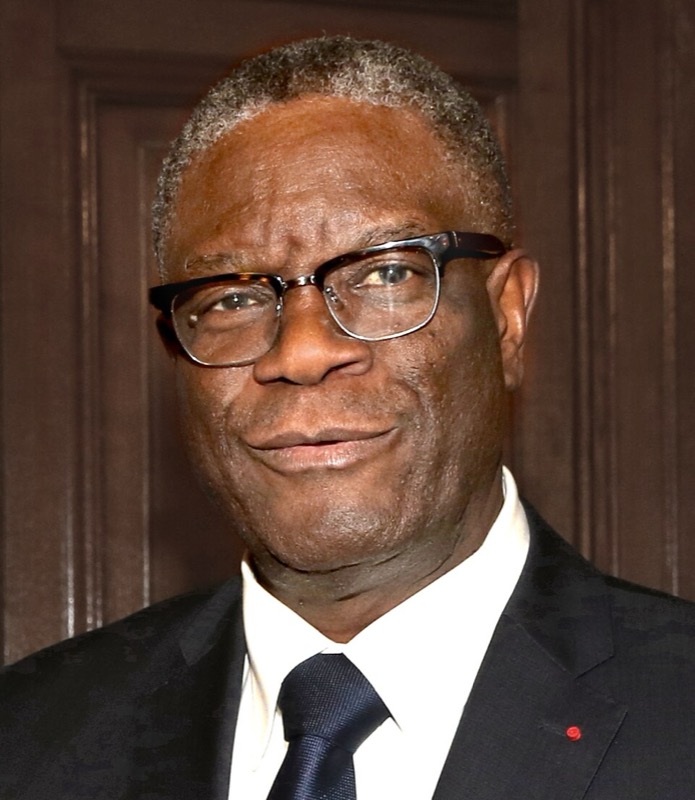
Denis Mukwege
Founder & Medical Director at Panzi Hospital
About
Denis Mukwege is a Congolese gynecological surgeon who founded Panzi Hospital in Bukavu, Democratic Republic of the Congo, in 1999, and has since treated over 85,000 survivors of sexual violence in one of the world's most dangerous conflict zones. His work documenting the systematic use of rape as a weapon of war in the DRC brought global attention to a crisis that the international community had largely ignored, and his testimony before the United Nations and other international bodies was instrumental in establishing sexual violence in conflict as a violation of international humanitarian law. Mukwege was awarded the 2018 Nobel Peace Prize for his efforts to end the use of sexual violence as a weapon. Despite multiple assassination attempts — including a 2012 attack in which his guard was killed — Mukwege has refused to leave the DRC, continuing to operate on survivors, train physicians, and advocate for justice.
Current Company
Panzi Hospital — Founder & Medical Director
A Surgeon's Response to Systematic Atrocity
Denis Mukwege founded Panzi Hospital in Bukavu, in the eastern Democratic Republic of the Congo, in 1999, initially intending to provide general gynecological care to women in one of the world's most underserved regions. Within months, the nature of his practice was transformed by the arrival of women and girls bearing injuries so severe and so systematic that they could not be explained by anything other than the deliberate use of sexual violence as a weapon of war. The DRC's ongoing conflict — involving dozens of armed groups fighting over mineral resources, territory, and power — had produced an epidemic of rape and sexual torture that was unprecedented in its scale and brutality, and Mukwege's hospital quickly became the primary treatment center for survivors.
Over more than two decades, Mukwege and his team at Panzi have treated over 85,000 survivors of sexual violence, developing surgical techniques and comprehensive care protocols — including psychological support, legal assistance, and economic reintegration — that have become the global standard for treating survivors of conflict-related sexual violence. The scope of the atrocities he has documented is staggering: victims ranging from infants to elderly women, injuries inflicted with weapons and foreign objects designed to cause maximum internal damage, and patterns of violence that clearly indicate coordination and command responsibility rather than isolated acts by individual soldiers.
From the Operating Room to the Nobel Stage
Mukwege's decision to speak publicly about what he was seeing in his operating room — first to the United Nations General Assembly in 2012, where he delivered an impassioned speech calling on the international community to hold perpetrators accountable, and subsequently to governments, human rights organizations, and media outlets around the world — transformed him from a physician treating individual patients into a global advocate demanding systemic change. His testimony was instrumental in establishing international legal precedents recognizing systematic sexual violence in conflict as a crime against humanity and a potential act of genocide, rather than an unfortunate byproduct of war.
The 2018 Nobel Peace Prize, awarded jointly to Mukwege and Yazidi human rights activist Nadia Murad, recognized not just his medical work but his courage in continuing that work despite extraordinary personal danger. In 2012, gunmen attacked his home, killing his security guard; Mukwege survived only because the guard's body shielded him. He briefly fled to Europe but returned to the DRC within months, greeted at the Bukavu airport by thousands of supporters who had raised money to pay for his return flight. His decision to go back — to continue operating on survivors, training physicians, and speaking truth about atrocities that powerful actors would prefer to keep hidden — remains one of the most remarkable acts of moral courage in recent history. Mukwege has said simply that he cannot leave his patients, and that his work will continue until the violence stops or until he is no longer able to hold a scalpel.