- Company
- Appaloosa Management
- Role
- Founder & President
- Est. Net Worth
- $20 Billion
- Stage
- Elite
- Industry
- Finance
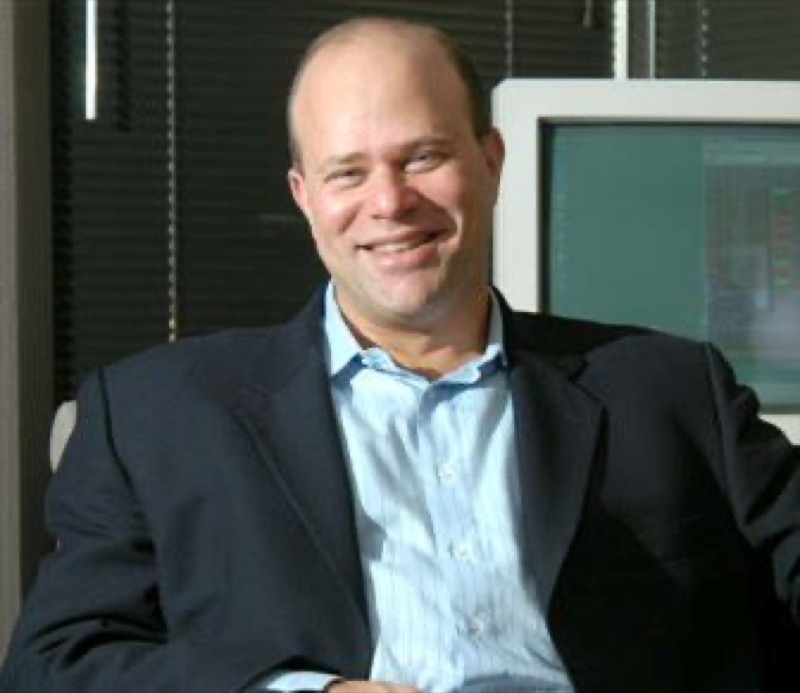
David Tepper
Founder & President at Appaloosa Management
About
David Tepper founded Appaloosa Management in 1993 after leaving Goldman Sachs, and it has since become one of the most consistently profitable hedge funds in history. Tepper is famous for his contrarian bets during moments of maximum fear — most notably his massive purchases of distressed bank stocks in early 2009, which earned his fund roughly $7 billion in a single year. His investment philosophy combines deep fundamental analysis with an unusual willingness to take concentrated positions when the risk-reward is asymmetric, a style that has generated annualized returns north of 25 percent over three decades. Beyond finance, Tepper owns the NFL's Carolina Panthers and MLS's Charlotte FC, and has donated over $150 million to Carnegie Mellon University, whose business school now bears his name.
Current Company
Appaloosa Management — Founder & President
The Contrarian Who Bought the Crisis
David Tepper's most famous trade — loading up on distressed bank stocks in early 2009, when the financial system appeared to be in freefall — earned Appaloosa Management roughly $7 billion in a single year and cemented his reputation as perhaps the greatest crisis investor of his generation. The logic was deceptively simple: the U.S. government had signaled through TARP and other programs that it would not allow the major banks to fail, which meant their equity was massively undervalued relative to the implicit government backstop. But knowing that intellectually and having the nerve to bet billions on it while the world was panicking were two very different things. Tepper had both the analytical clarity and the psychological fortitude, a combination that has defined his entire career.
His investment philosophy defies easy categorization. Tepper is neither a pure value investor nor a macro trader but something in between — a fundamentals-driven contrarian who overlays his stock-picking with a sophisticated understanding of government policy, central bank behavior, and market psychology. He has generated annualized returns above 25 percent over three decades, a track record that puts him in a class with only a handful of investors in history. What makes Tepper unusual among hedge fund legends is his willingness to go both long and short, to trade across the capital structure from equities to distressed debt, and to size his positions aggressively when conviction is high — a flexibility that has allowed him to profit in nearly every market environment.
From Pittsburgh Steel Country to the Pantheon of Investors
Tepper grew up in Pittsburgh's East End, the son of an accountant, and the steel-country work ethic of his upbringing has never fully left him despite a net worth that now exceeds $20 billion. After graduating from Carnegie Mellon University (which he later honored with a $125 million gift, prompting the business school to be renamed the Tepper School of Business) and earning his MBA from the University of Pittsburgh, he spent eight years at Goldman Sachs trading junk bonds before launching Appaloosa in 1993 with $57 million. The fund's early years were spent in distressed-debt investing — buying the bonds of bankrupt or near-bankrupt companies at steep discounts and profiting as they restructured — a gritty corner of finance that rewarded the kind of analytical rigor and emotional toughness that Tepper possessed in unusual measure.
His purchase of the Carolina Panthers in 2018 for $2.275 billion — a record price for an NFL franchise at the time — reflected a different kind of investment thesis: sports franchises as trophy assets with near-certain appreciation in an era of exploding media rights deals. Tepper has since invested heavily in Charlotte's sports and real estate infrastructure, including plans for a new stadium complex that would reshape the city's urban core. It is a long-term bet on Charlotte's growth trajectory, the kind of patient, contrarian wager that has defined his career — and a reminder that for all his reputation as a hard-charging trader, Tepper's biggest returns have always come from his willingness to look past the current panic and see what the world will look like in five or ten years.