- Company
- Bobby Flay Restaurants
- Role
- Chef, Restaurateur & Media Personality
- Est. Net Worth
- $60 Million
- Stage
- Established
- Industry
- Hospitality
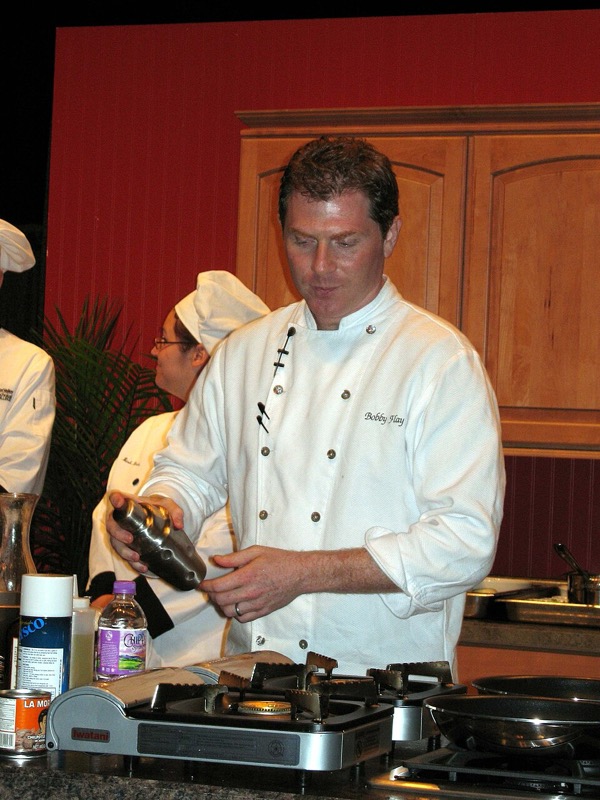
Bobby Flay
Chef, Restaurateur & Media Personality at Bobby Flay Restaurants
About
Bobby Flay has sustained a career at the top of both the culinary and television industries for over three decades — a longevity that no other chef-broadcaster has matched. Rising to prominence in the early 1990s at Mesa Grill in New York, where his bold Southwestern cuisine earned critical acclaim and a James Beard Award, Flay became one of the original stars of the Food Network with shows including 'Iron Chef America,' 'Throwdown with Bobby Flay,' 'Beat Bobby Flay,' and 'Bobby's Triple Threat.' His restaurant portfolio has spanned concepts from the upscale Mesa Grill to the burger-focused Bobby's Burger Palace chain, demonstrating an ability to translate his culinary vision across formats and price points. What distinguishes Flay from many celebrity chefs is the consistency of his output over decades — his cooking, rooted in bold flavors, open-fire grilling, and Southwestern spice profiles, has remained identifiable and relevant even as food trends have cycled through numerous fashions.
Current Company
Bobby Flay Restaurants — Chef, Restaurateur & Media Personality
The Iron Chef Who Never Stopped Competing
Bobby Flay's career has been defined by competition — both literal and figurative. His rise through the New York restaurant scene in the early 1990s was fueled by a fierce ambition that set him apart from his contemporaries: while other young chefs were content to master classical technique, Flay was developing a bold, highly personal style rooted in Southwestern flavors — chiles, salsas, and open-fire cooking techniques — that was unlike anything being served in New York at the time. Mesa Grill, which opened in 1991, was an immediate critical and commercial hit, and Flay's combination of culinary talent and competitive charisma made him a natural fit for the Food Network, which was then in its early years and searching for personalities who could make cooking entertaining.
His television career has spanned nearly three decades and includes some of the most popular food shows in history: 'Iron Chef America,' where he served as one of the show's most formidable chefs; 'Throwdown with Bobby Flay,' which put him in direct competition with specialists in their own cuisines; and 'Beat Bobby Flay,' which inverted the formula by inviting challengers to try to defeat him. The competitive format has been remarkably durable, and Flay's willingness to lose gracefully on camera — something many celebrity chefs would never allow — has made him one of the most likable personalities in food media.
Restaurants, Business, and Three Decades at the Top
Flay's restaurant career has evolved through multiple phases, from the critical acclaim of Mesa Grill and Bar Americain to the commercial scale of Bobby's Burger Palace, a fast-casual chain that operated over a dozen locations before being scaled back. Each concept reflected a different facet of Flay's culinary identity — Mesa Grill showcased his Southwestern fine dining, Bar Americain celebrated regional American cuisine, and Bobby's Burger Palace demonstrated that his flavors could work at an accessible price point. His most recent ventures, including Amalfi and Bobby's, show a chef who continues to evolve while maintaining the bold flavor profiles that have been his signature for three decades.
What distinguishes Flay from many celebrity chefs who rose to prominence during the same era is his sustained relevance across both the restaurant and media industries. Many of his contemporaries have either retreated from active cooking or allowed their restaurant brands to dilute, but Flay has maintained a presence in both arenas — opening new restaurants that are reviewed on their own merits while continuing to develop television content that draws large audiences. His negotiation of a rumored $100 million contract with Food Network — which he ultimately left to pursue projects with other networks — demonstrated both his commercial value and his willingness to take risks in a career that he has consistently managed with the same competitive intensity that defines his cooking.