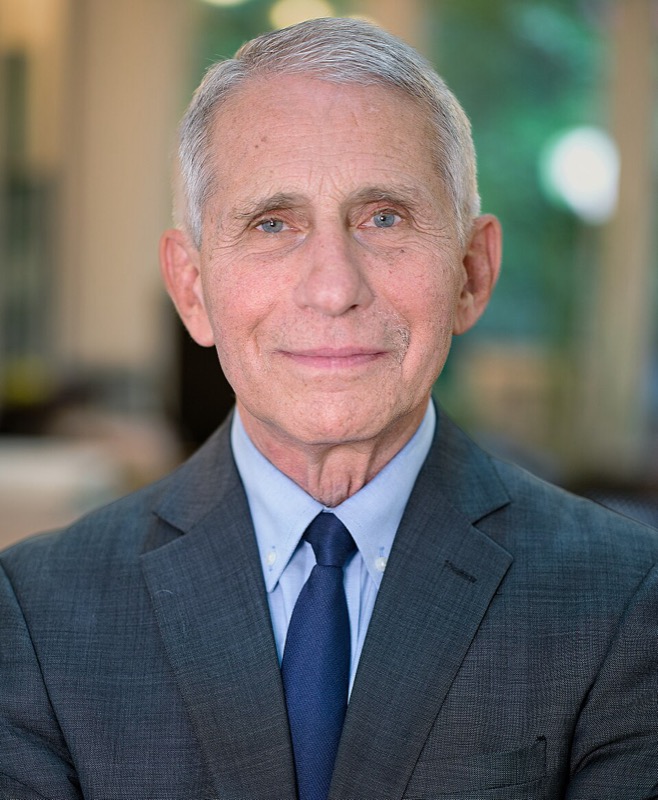
- Company
- NIAID / National Institutes of Health
- Role
- Former Director
- Est. Net Worth
- $8 Million (Est.)
- Stage
- Emerging
- Industry
- Healthcare
Anthony Fauci
Former Director at NIAID / National Institutes of Health
About
Anthony Fauci served as director of the National Institute of Allergy and Infectious Diseases for 38 years — from 1984 to 2022 — making him the longest-serving head of any major NIH institute and one of the most cited scientists in history. His career spans every major infectious disease crisis of the modern era: HIV/AIDS, SARS, MERS, Ebola, Zika, and COVID-19. During the AIDS epidemic, Fauci initially faced fierce protests from activists who accused the federal government of indifference, but he uniquely among government officials engaged directly with the activist community, ultimately redesigning the clinical trial process to give patients more access to experimental treatments. His leadership during the COVID-19 pandemic made him the most recognized physician in the world and the de facto voice of American public health. Fauci's post-government career includes a professorship at Georgetown University and advisory roles shaping pandemic preparedness policy.
Current Company
NIAID / National Institutes of Health — Former Director
The Scientist Who Became America's Doctor
Anthony Fauci's 38-year tenure as director of the National Institute of Allergy and Infectious Diseases spanned every major infectious disease crisis of the late twentieth and early twenty-first centuries, making him arguably the most consequential public health official in American history. His career at NIAID began with fundamental immunology research, but the arrival of the AIDS epidemic in the early 1980s thrust him into a dual role — leading the government's scientific response to a devastating new disease while simultaneously navigating the fierce political and social conflicts that surrounded it. Fauci's early interactions with AIDS activists were adversarial; groups like ACT UP staged protests at NIH and burned Fauci in effigy, accusing the federal establishment of indifference to a disease that was disproportionately killing gay men. What happened next was remarkable: rather than retreating behind institutional walls, Fauci engaged directly with the activist community, ultimately incorporating their demands into the clinical trial process and creating new pathways for patients to access experimental treatments.
This willingness to listen to critics and adapt — a quality unusual in any government official, let alone one leading a massive research bureaucracy — became the defining characteristic of Fauci's leadership style. His relationship with AIDS activists evolved from mutual hostility to genuine partnership, and the drug-approval reforms that emerged from that collaboration accelerated the development of the antiretroviral therapies that transformed HIV from a death sentence into a manageable chronic condition. The model Fauci helped create — in which patient advocates participate directly in the design and oversight of clinical trials — has since been adopted across medicine and is now considered a best practice in clinical research.
Pandemic, Politics, and the Price of Public Service
Fauci's role during the COVID-19 pandemic made him the most recognized physician in the world — and, paradoxically, one of the most polarizing figures in American public life. His daily briefings in the early months of the pandemic, in which he translated complex epidemiological data into plain English with a calm, authoritative demeanor, provided a steadying presence during a period of extraordinary uncertainty. But as the pandemic became entangled with partisan politics, Fauci found himself caught between the demands of scientific accuracy and the pressures of political messaging — a position that made him a hero to those who saw him as the last honest voice in a government that was minimizing the crisis, and a villain to those who viewed his recommendations as overreaching government intervention.
The personal cost was significant: Fauci and his family received death threats severe enough to require a security detail, and his decades of public service became the subject of congressional investigations and partisan attacks that would have caused many officials to resign. That he remained at his post through it all — continuing to advise on pandemic response, vaccine development, and global health preparedness — reflected a commitment to public service rooted in his Brooklyn upbringing and Jesuit education. Now in his post-government career, Fauci has focused on teaching at Georgetown University, writing about his experiences, and advocating for institutional reforms that would better insulate public health agencies from political interference during future crises.